China Top Coaxial Cable Connectors Manufacturers?
China is a major source of coaxial cable connectors for telecommunications, broadcasting, test equipment, and industrial electronics. Its manufacturers range from specialized connector makers to larger companies offering cables, assemblies, and related components. For buyers, the challenge is not simply finding a long supplier list. It is determining which factory can consistently meet the application’s electrical, mechanical, and production requirements.
A useful comparison starts with connector type, impedance, operating frequency, and interface compatibility. Buyers should also examine materials, plating options, dimensional tolerances, and the quality checks used during production. Ask whether samples are available and how the supplier verifies return loss, insertion loss, and connection durability. Details matter. Production capacity and customization can be important, but clear drawings, traceable specifications, and responsive technical support often reveal more than a broad product catalog. Certifications may help establish process controls, though their relevance depends on the product and intended market.
This guide introduces notable China-based manufacturers and practical ways to assess them. It considers product coverage, manufacturing capabilities, quality practices, and support for custom requirements. No single supplier is the best fit for every project. A company that suits a short prototype run may not be ideal for stable, high-volume orders. That distinction deserves attention. Supplier claims should be checked against samples, documentation, and the buyer’s own performance criteria before a purchasing decision is made.
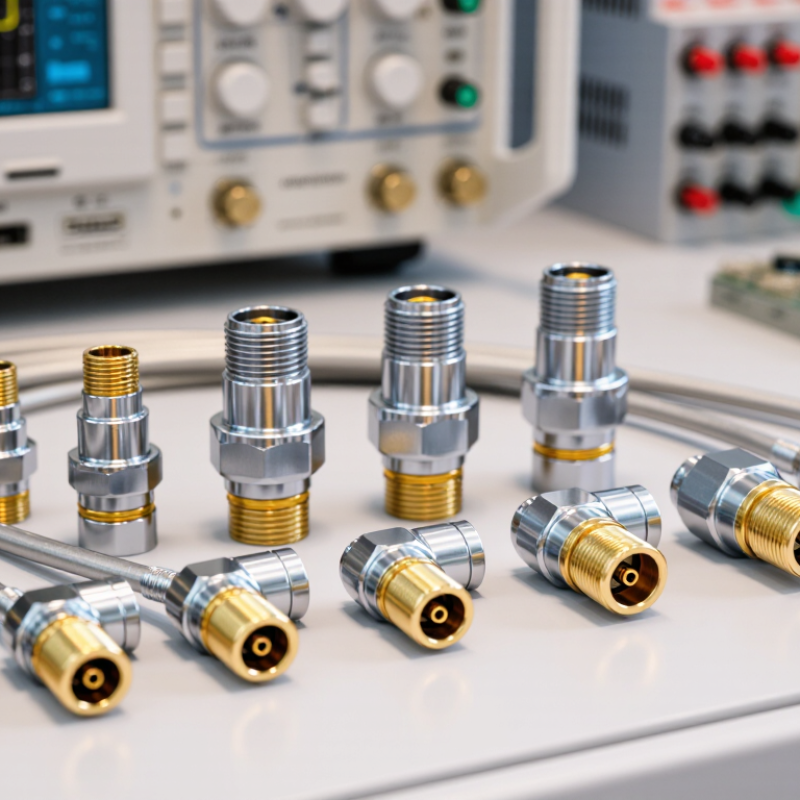
How China’s Coaxial Connector Industry Is Classified Under IEC 61169
IEC 61169 is a standards family for radio-frequency coaxial connectors, not a ranking of manufacturers.
It gives buyers a way to compare connector types through general, sectional, and detail specifications. Each applicable specification can define interface dimensions, electrical limits, and verification methods. This matters when comparing products made in China: a shared product name does not guarantee matching interfaces. Small details matter.
A practical classification checks coupling style, impedance, operating frequency, and the connector’s specified interface.
Threaded, bayonet, and push-on couplings behave differently during installation and repeated connection. A 50-ohm connector should not be treated as interchangeable with a 75-ohm version. Depending on the relevant specification, evaluation may include return loss, insertion loss, durability, and environmental tests. Ask for the exact IEC designation, revision, dimensional drawings, and test evidence for the offered part. I would not rely on a catalogue label alone; a familiar shape can hide a mismatch.
One point is easy to overlook: the standard helps define performance, but the finished cable assembly and its workmanship still affect real-world results.
Which Manufacturers Offer 50Ω RF and 75Ω Video Connector Lines
China’s coaxial connector market includes manufacturers focused on 50Ω RF parts, 75Ω video parts, and mixed product catalogues. The useful question is not whether a supplier lists both. It is whether each line has clear electrical specifications and consistent production controls. For 50Ω RF applications, compare connector types such as SMA, N, or TNC by frequency range, return loss, and mating durability. For 75Ω video systems, inspect BNC or F-type options, impedance tolerance, and shielding performance. Small mismatches matter. They can cause reflections or signal problems, especially across longer cable runs.
Ask for drawings, material details, and test reports linked to the exact part number. Check center-contact dimensions, dielectric material, shell finish, and cable compatibility. A reliable manufacturer should explain how it checks impedance and continuity, not merely provide a polished catalogue. Request samples from the intended production line, then test them with your cable and operating frequency. One detail is easy to miss: a connector may fit mechanically while performing poorly electrically. I would also ask whether the 50Ω and 75Ω versions differ internally. Supplier information can be incomplete, so compare documentation with measured sample results before approving a design.
How SMA, BNC, N, and TNC Connectors Differ in Frequency Ratings
SMA, BNC, N, and TNC connectors differ in size, coupling style, and typical frequency range. SMA connectors are compact and commonly rated to 18 GHz; precision versions may support higher frequencies. BNC connectors use a quick bayonet coupling. Many standard versions suit signals up to about 4 GHz, while specialized designs can reach higher. Check the datasheet, not just the connector name.
N-type connectors are larger and threaded, helping maintain a stable connection in outdoor or higher-power setups. Standard versions are often rated to 11 GHz, though precision designs may reach 18 GHz. TNC connectors also use a threaded coupling and commonly operate to around 11 GHz. Small details matter. A worn center pin, loose fit, or sharp cable bend can affect performance before the connector reaches its stated limit.
These figures are typical, not universal. The cable, assembly quality, and mating interface all influence the usable range; the lowest-rated part usually sets the practical ceiling. For example, a connector rated to 18 GHz cannot make an ordinary cable assembly perform at that frequency. I would verify the complete assembly specification and measurement conditions before choosing. It is easy to over-trust a familiar connector label. That deserves a second look.
How Buyers Compare RF Connectors by VSWR, Insertion Loss, and Return Loss
China Top Coaxial Cable Connectors Manufacturers?
How Buyers Compare RF Connectors by VSWR, Insertion Loss, and Return Loss
When comparing coaxial cable connectors, buyers should check performance across the frequency band they actually use. A low VSWR indicates less mismatch, while higher return loss means less reflected energy. Insertion loss should remain low, especially where long cable runs or weak signals leave little margin. A single figure at one frequency rarely tells the full story. Ask how measurements were taken, including test frequency, connector interface, and calibration method.
A tidy datasheet is not the whole story. Test results can vary with the mating connector, cable assembly, torque, and measurement fixture. When reviewing manufacturers, request recent test reports and confirm that samples match the proposed materials and dimensions. Compare like with like: VSWR, insertion loss, and return loss should use the same frequency range and test conditions. Field results can differ. That deserves a second look.
Tips: Test a sample assembly on calibrated equipment. Record the frequency range, cable length, and connector torque. Check repeatability after several mating cycles. If results look unusually clean, ask for the raw measurement plot; specifications alone may hide a narrow band of weaker performance.
How to Verify Suppliers Through IEC Test Reports and ISO 9001 Quality Systems
When comparing coaxial cable connector manufacturers in China, request test evidence for the exact connector family, not a generic claim of IEC compliance. For RF connectors, relevant IEC 61169 documents may define interface and test requirements. Confirm the applicable part and edition. Check the report number, laboratory identity, test date, sample description, and measured results. Review return loss, insertion loss, impedance, mating durability, and environmental tests where relevant. Small mismatches matter.
An ISO 9001 certificate shows that a quality management system is documented; it does not guarantee every connector is flawless. Verify the certificate number, validity, factory address, scope, and issuing body in its own registry. Then ask how controls reach the production line: incoming-material checks, crimp-height records, plating-thickness logs, calibration status, and corrective-action records. A certificate is only a starting point.
Compare report samples with production samples, including connector interface, cable type, and finish. Ask how each batch is traced and what happens when a measurement falls outside specification. Some reports are old or cover a near-match sample. That is easy to miss. Request clarification, and record any limits or exceptions before approval. A neat document can still leave practical questions unanswered.