
Spotlight Led Lights can shape how a room feels, not just make it brighter. A narrow beam can pick out a painting, while a wider beam can illuminate a kitchen counter or shop display. The difference is easy to miss in a product photo. In person, beam spread, mounting position, and surface color all affect the result.
This guide looks at the main types of LED spotlights, including recessed, track-mounted, surface-mounted, outdoor, and portable designs. Each suits different spaces and installation needs. Recessed models create a neat ceiling line, while track lights can be repositioned as a room changes. Outdoor units need suitable weather protection, and portable lights trade permanent placement for flexibility. No single type works everywhere.
A few specifications deserve close attention. Check beam angle, brightness, color rendering, dimming compatibility, and the fixture’s heat management. For damp or exposed areas, confirm the stated ingress-protection rating rather than relying on appearance. Small details matter. A powerful light can still create glare if aimed poorly, and a high color-rendering score does not guarantee a pleasing result in every room. That part takes judgment.
The sections ahead compare these options by use, strengths, and limitations. They also explain what to check before buying, so readers can match a spotlight to the task instead of choosing by wattage alone. Even then, the best choice may take a little testing. Light behaves differently once it reaches the actual room.
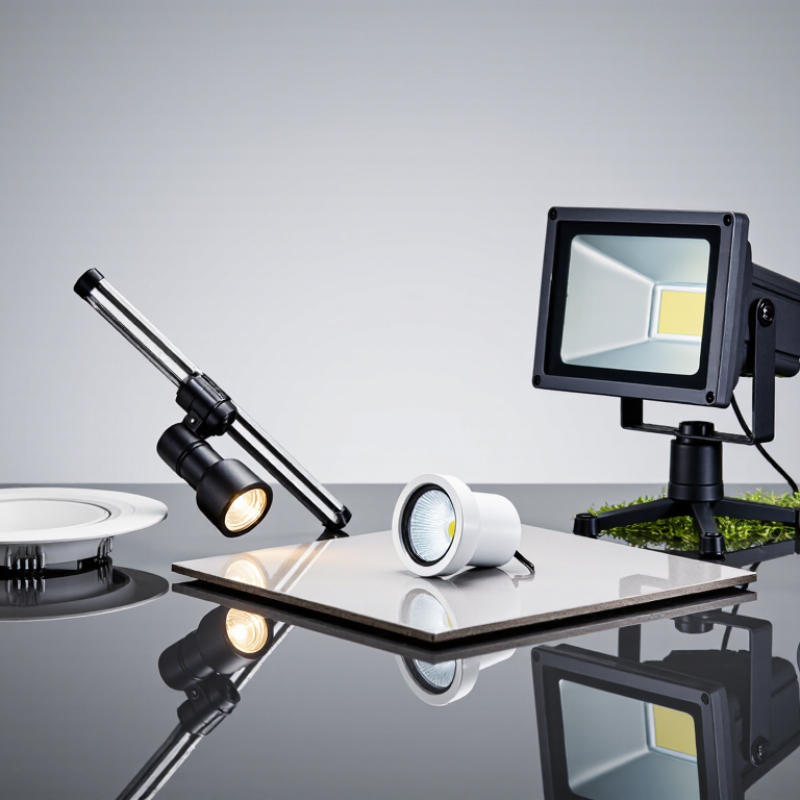
Recessed LED spotlights tuck into the ceiling, leaving the trim nearly flush with the surface. The result suits kitchens, hallways, and living rooms where a pendant might interrupt a clean ceiling line. A narrow beam can pick out a painting or countertop; a wider beam gives softer, more general coverage. Check the beam angle and color temperature before choosing. A cool white beam may feel crisp over a worktop, while a warmer tone often feels calmer beside a sofa. Keep it subtle. A perfectly flush ceiling can still feel flat when every light points straight down.
The U.S. Department of Energy’s Energy Saver guidance reports that LEDs use at least 75% less energy and can last up to 25 times longer than incandescent lighting. These are broad comparisons, not a guarantee for every fitting; lifespan depends on product quality, heat management, and use. Recessed fixtures need enough space for heat to escape, and dimmers must be compatible with the LED. For a renovation, confirm ceiling depth and insulation conditions before cutting openings. Wiring changes are best checked by a qualified electrician. The small mistake is easy to make: choosing a fixture for its trim alone, then discovering its light is too harsh or poorly placed.

Recessed LED spotlights create a clean, built-in ceiling look. Choose a beam angle to suit the task: narrow beams focus light on a small area, while wider beams spread it across more of a room. Values shown are representative examples; actual beam angles vary by fixture.
Track-mounted LED spotlights suit spaces where lighting needs may change over time. Each spotlight can slide along the track and pivot toward a chosen area. That flexibility helps when furniture moves or displays change. Need light on a new work surface? Reposition a head instead of adding another fixture. Narrow beams can highlight framed art, while wider beams provide softer coverage over counters or seating. Check beam angle, light output, and color temperature before choosing. A powerful, narrow beam may create glare rather than useful light.
Track systems still require careful planning. Track types and electrical connections are not always interchangeable, so check the product documentation and ceiling support before installation. In a kitchen, aim heads at preparation areas, not directly toward seated diners. In a gallery, overlapping beams can reduce dark gaps between displays. Test the layout after dark; reflections on glass may not show up during daytime. One easy-to-miss detail is shadow placement. A spotlight can brighten an object while casting an awkward shadow behind it. A perfectly symmetrical layout may also feel flat. Leave room to adjust—the final arrangement might differ from the plan.
Surface-mounted LED spotlights suit rooms where a recessed ceiling cavity is unavailable or difficult to access. The fixture attaches directly to the ceiling or wall, often over a suitable electrical box. No cutout needed. That can reduce installation work in concrete ceilings, older homes, and finished spaces. Before fitting one, check the box is secure and rated for the fixture’s weight. Turn off the circuit at the breaker, and confirm the wiring arrangement with a qualified electrician if anything is unclear.
Simple mounting does not guarantee good lighting. Measure the ceiling height, then choose a beam angle that lights the target without creating harsh glare on screens or glossy surfaces. A narrow beam can highlight a painting; a wider beam works better over a kitchen counter. Check dimmer compatibility, too. U.S. Department of Energy Energy Saver guidance reports that LEDs use at least 75% less energy and can last up to 25 times longer than incandescent lighting. Those figures describe LEDs broadly, not every spotlight or installation. Actual results depend on product quality, operating hours, and heat management. Surface-mounted units are convenient, but some sit visibly below the ceiling; that small detail can matter in a low room.
Gimbal LED spotlights are useful when a fixed beam cannot reach the right surface. Their adjustable inner housing lets you tilt and direct the light after installation. This makes them practical for highlighting a framed print, a kitchen counter, or a textured wall without moving the fixture. The beam can be narrow and crisp, so aim carefully to avoid glare in seated areas. Small adjustments matter.
Choose a spotlight with a gimbal range that suits the room, and check its cutout size before buying. A dimmable model can help shift from bright task lighting to softer evening light, provided the dimmer and fixture are compatible. Color temperature also changes the feel: warmer light often looks comfortable in living spaces, while neutral white can reveal details more clearly. There is no universally correct setting; wall color and finish affect the result.
Tips: Aim the beam at the object, not directly at eye level. Test the angle at night, when reflections on glass and glossy surfaces become easier to spot. Leave room for adjustment, too. A gimbal can point precisely, but it cannot fix poor placement or uneven spacing.
| Spotlight Type | Typical Mounting | Beam Direction | Typical Beam Angle | Common Uses | Key Consideration |
|---|---|---|---|---|---|
| Gimbal LED Spotlight | Recessed ceiling | Adjustable head tilts and, depending on the design, swivels to aim light at a chosen surface or object. | About 15°–40° for many spotlight models | Accent lighting, artwork, display shelves, and highlighting architectural features | Useful when the beam needs precise aiming; check the fixture’s tilt range and ceiling clearance. |
| Fixed Recessed LED Spotlight | Recessed ceiling | Fixed downward direction | About 15°–40°, depending on the lamp or optic | General accent lighting and focused illumination in rooms with a planned lighting layout | Creates a clean, low-profile appearance, but the beam cannot be redirected after installation. |
| LED Track Spotlight | Ceiling-mounted track | Fixture heads can usually be repositioned along the track and aimed independently. | Commonly about 15°–60%, depending on the fixture and optic | Retail displays, galleries, studios, and spaces where lighting arrangements may change | Flexible aiming and repositioning; confirm track compatibility and the required power supply. |
| Surface-Mounted LED Spotlight | Mounted directly onto a ceiling or wall | Fixed or adjustable, depending on the model | Often about 15°–40% for focused models | Concrete ceilings, retrofit projects, corridors, and areas without recessed space | Does not require a ceiling void, but the fixture is visible on the mounting surface. |
| LED Projector Spotlight | Track, surface, or dedicated mounting bracket | Projects a defined beam; some models allow aiming or use interchangeable optics. | Varies widely; narrow-beam options are available | Feature walls, signs, displays, and long-distance accent lighting | Beam shape, distance, and brightness should be matched to the target to avoid unwanted spill light. |
| Outdoor LED Spotlight | Ground stake, wall, or exterior mounting bracket | Usually adjustable to direct light toward landscaping, façades, or other outdoor features | Varies by optic; narrow and wider beam options are available | Landscape accents, trees, entrances, and exterior architectural details | Choose a suitable weather-protection rating for the installation location and aim the light to limit glare. |
Note: Beam angles and adjustment ranges vary by fixture design. Check the product specifications and the required lighting effect before selecting a spotlight.
Outdoor LED spotlights serve two distinct purposes: shaping a garden after dark and improving visibility around entrances. For trees, stone walls, or tall grasses, an Adjustable Spotlight can direct a narrow beam upward. A wider beam works better for paths and low planting. Aim, then observe. Test the beam after dark before securing the fixture; a bright patch can look harsh beside softer garden lighting.
For security, motion-activated spotlights can illuminate a driveway or side gate when movement is detected. Choose brightness for the area, not simply the highest lumen figure. Check the stated lumen output, beam spread, and weather-protection rating. Warm white light often feels calmer in a garden, while neutral white can reveal surface details more clearly. Neither is perfect.
Position lights to reveal steps, locks, and likely approach routes without shining into windows or neighboring yards. Mounting too high may cause glare; too low can leave deep shadows. Walk the area at night and adjust the beam from normal eye level. Use appropriately rated electrical fittings, and consult a qualified electrician if wiring is unfamiliar. Passing branches may trigger motion sensors. Adjust their placement and sensitivity.
© 2023 JEM Electronics, Inc. – United States Cable Assembly. All rights reserved.