
Rotating Machines are essential in modern industries. They convert energy into motion and perform various functions. Understanding their types is crucial for engineers and technicians.
There are many rotating machines, each serving specific purposes. Motors, generators, and turbines represent significant categories. These machines drive machinery and support power generation. Their role can be found in manufacturing plants, power stations, and more.
Some rotating machines have distinct designs. For instance, centrifugal pumps move fluids efficiently. However, the complexity of these machines can be daunting. Maintenance is often neglected, leading to failures. Knowing the top types of rotating machines is vital for anyone in the field.
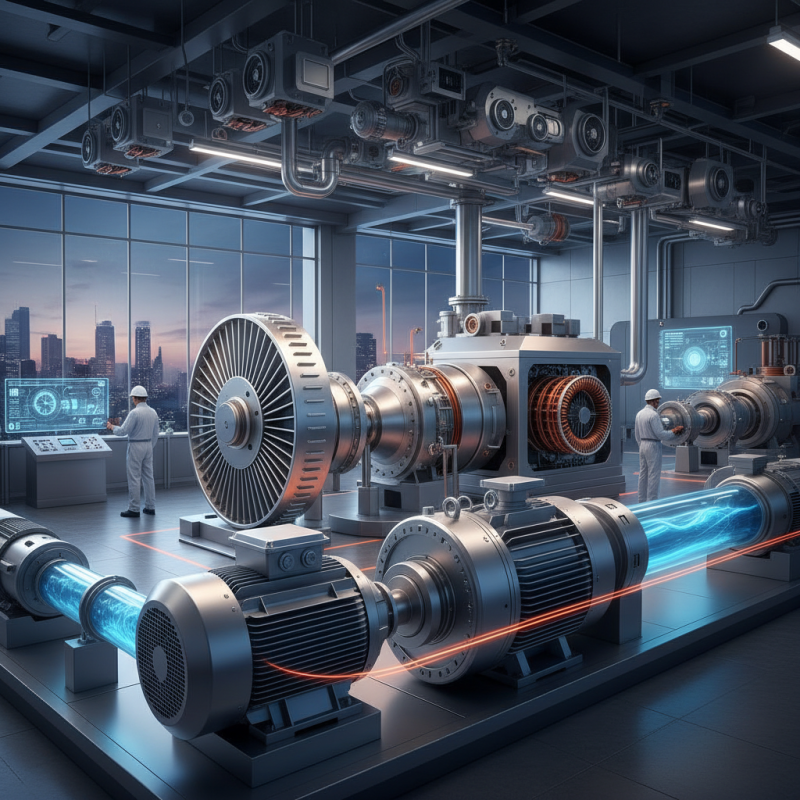
Rotating machines are essential in numerous industries. They play a vital role in energy production, manufacturing, and transportation. These machines convert energy from various sources into mechanical work. According to recent reports, the global rotating machinery market is projected to reach $600 billion by 2028. This growth reflects the increasing demand for efficient and reliable mechanical systems.
There are several types of rotating machines. Electric motors are commonly used in many applications. They provide a reliable and efficient way to convert electrical energy into mechanical energy. Centrifugal pumps are another type. They are critical in fluid transfer applications. However, not all designs are optimal, and energy losses can occur. Such inefficiencies can slow down productivity.
Turbines are also crucial machines in power generation. They harness energy from wind, water, and steam. Yet, the environmental impact of some turbine designs needs close examination. Lastly, compressors serve various industrial functions. They compress gases for storage or transport. Despite their importance, maintaining optimal performance can be challenging. Regular assessments are crucial to minimize risks.
Electric motors are vital components in various applications. They convert electrical energy into mechanical energy. This process powers everything from household appliances to industrial machinery. Understanding their workings can help improve efficiency in usage.
Various types of electric motors exist. For instance, AC motors are common in homes. They are durable and require less maintenance. However, they are not suitable for all applications. DC motors, on the other hand, provide better speed control. They are often used in robotics and electric vehicles. It’s crucial to choose the right type for specific tasks.
Automation systems increasingly rely on these motors. They help streamline operations in factories and reduce labor costs. Yet, issues like overheating can occur if not monitored. Regular maintenance is essential for optimal performance. A deeper knowledge of electric motors can lead to significant advancements. It also encourages innovation and problem-solving within various engineering fields. Understanding the strengths and weaknesses of each motor type is key to efficiency and success.
Turbines are fascinating machines that convert fluid energy into mechanical power. They play a crucial role in many industries. These machines come in different types. Steam turbines, for example, generate power using steam produced from heated water. This process can be highly efficient but often requires significant energy input.
Wind turbines, on the other hand, harness the wind's kinetic energy. They transform this energy into electricity. These machines can be found on land and in offshore locations. They are a vital part of modern renewable energy solutions. Their impact on wildlife, however, raises questions about design and placement.
Water turbines also deserve attention. They operate in rivers and oceans to generate power. While effective, they can affect local ecosystems. Designers must consider the potential consequences of these installations. Turbines represent innovation but also challenge us to balance energy needs and environmental responsibility.
| Type | Description | Efficiency (%) | Applications |
|---|---|---|---|
| Steam Turbine | Converts thermal energy from steam into mechanical work. | 80-90 | Power plants, ships, and industrial processes. |
| Gas Turbine | Uses combustion gases to produce high-speed rotational motion. | 30-40 | Electricity generation, aviation, and marine propulsion. |
| Water Turbine | Converts kinetic energy from flowing water into mechanical energy. | 85-90 | Hydroelectric power stations. |
| Arnold Turbine | A variant focusing on efficiency in gas-to-liquid conversion. | 75-85 | Waste gas treatment and energy recovery. |
| Wind Turbine | Harnesses wind energy to generate mechanical power. | 35-45 | Wind farms and renewable energy installations. |
| Pelton Wheel | A water impulse turbine efficient for high head applications. | 85-90 | Hydropower in mountainous regions. |
| Francis Turbine | Suitable for a wide range of water flows and heads. | 70-90 | Hydroelectric plants. |
| Kaplan Turbine | A propeller-type water turbine for low-head hydroelectric sites. | 90+ | Hydropower plants with low head. |
| Wind Turbine Generator | Combines turbine functionality with a generator to produce electricity. | 30-50 | Wind energy capture and power supply. |
| Hydraulic Turbine | Utilizes gravitational water flow to generate power. | 75-85 | Various hydro applications. |
Generators play a crucial role in converting mechanical energy into electricity. They utilize electromagnetic induction to achieve this transformation. Essentially, they consist of a rotor and a stator, working together to generate power. The rotor spins, usually driven by an external force, such as a turbine or an engine. This motion creates a magnetic field that interacts with the windings of the stator. The result? Electricity is produced.
Moreover, the efficiency of generators can vary widely. Some designs work better under certain conditions, while others do not. For instance, a generator powered by renewable sources often faces challenges. Wind and solar power fluctuate throughout the day. This variability can lead to periods of low efficiency. However, it also reflects the ongoing evolution in generator technology. Engineers consistently seek methods to improve this vital process.
When considering generators, it is important to recognize their limitations, too. Maintenance is essential for optimal performance. Wear and tear can lead to unexpected failures. Regular checks can prevent this but many overlook them. Beyond that, the initial cost can be a barrier. Understanding these aspects allows for better planning and smarter choices. Generators are critical in our energy landscape, but they demand careful consideration and respect for their complexity.
Pumps play a crucial role in various industries by efficiently moving fluids. Their design can vary widely, adapting to specific applications. A pump captures energy and transfers it to a fluid, usually generating flow. Many types exist, including centrifugal and positive displacement pumps.
Centrifugal pumps utilize rotating impellers to transform kinetic energy into fluid motion. They excel with low-viscosity liquids. However, they may not perform optimally with thicker fluids. Positive displacement pumps, in contrast, push fluid through a chamber, providing a consistent flow regardless of pressure changes. They can struggle with lower flow rates.
Choosing the right pump isn't always straightforward. Factors like fluid type, temperature, and pressure come into play. It's essential to analyze the operation thoroughly. A poorly chosen pump can lead to inefficiencies and increased costs. An effective pump system must be both reliable and responsive to varying demands. Regular maintenance is key to ensuring longevity and functionality.
Rotating machines are essential components in various industries, playing a crucial role in energy conversion and fluid movement. This article outlines the top ten types of rotating machines, starting with electric motors, which are widely used for their versatility in converting electrical energy into mechanical motion. Turbines are highlighted for their capability to harness energy from fluids, making them vital in power generation and propulsion systems.
Additionally, the article discusses generators, which convert mechanical energy into electricity, thereby serving as a cornerstone in the power supply sector. Pumps effectively move fluids across different systems, while compressors are vital for increasing pressure within gas and air systems. Understanding these rotating machines is imperative for maximizing efficiency and performance in their respective applications, showcasing their significance in modern technology.

© 2023 JEM Electronics, Inc. – United States Cable Assembly. All rights reserved.