What is a Single Girder Gantry Crane and Its Benefits?
A Single-Girder Gantry Crane is a crucial piece of equipment in various industries. It is designed to lift and move heavy loads efficiently. This crane features a single girder that spans across two supporting legs. Its design offers unique advantages, making it a popular choice for many businesses.
The benefits of a Single-Girder Gantry Crane are numerous. First, its compact design allows for space-saving operations. It can fit into smaller areas where larger cranes cannot. Additionally, it is often more cost-effective than its double-girder counterparts. Companies can save money while still achieving high lifting capacities and performance.
However, it is essential to recognize that a Single-Girder Gantry Crane has its limitations. For heavier loads, its capacity may not meet certain demands. Users must carefully assess their specific needs. This equipment requires regular maintenance to ensure reliability and safety. Proper training for operators is also vital to maximize its benefits. Ultimately, when used appropriately, a Single-Girder Gantry Crane can greatly enhance productivity and efficiency in any operation.
What is a Single Girder Gantry Crane and Its Functionality?
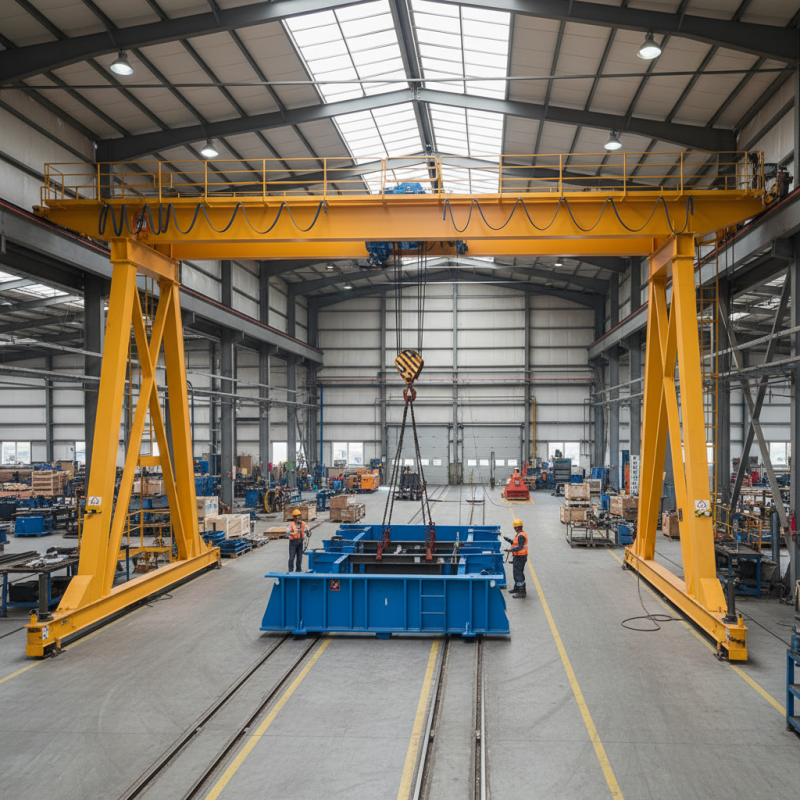
A single girder gantry crane is an essential piece of equipment in various industries. It is designed to lift and move heavy loads efficiently. The crane operates with a single overhead beam, supported by two legs on wheels. This configuration allows for space efficiency, making it ideal for workshops with limited headroom.
In terms of functionality, these cranes are versatile. They can be used indoors or outdoors, suiting many applications. According to a recent market report, the global gantry crane market is expected to grow at a CAGR of 4.5% through 2028. This growth indicates a rising demand for efficient lifting solutions in sectors like construction and logistics.
Tips: Ensure the crane is regularly maintained to avoid operational issues. Regular inspections help identify potential problems early. Additionally, train operators to enhance safety and efficiency.
While single girder gantry cranes are beneficial, they do come with limitations. They have a lower lifting capacity compared to double girder models. This might not meet the needs of all operations. Understanding specific requirements is crucial before making a choice. Investing time in assessment can lead to better efficiency in the long run.
What is a Single Girder Gantry Crane and Its Benefits?
| Feature | Description | Benefits |
| Single Girder Design | A crane with a single beam supporting the lifting mechanism. | Lower construction cost due to simpler design. |
| Mobility | Can move along rails or wheels on a flat surface. | Versatile usage in outdoor and indoor environments. |
| Load Capacity | Can typically lift loads ranging from a few tons to over 20 tons. | Efficient for various lifting needs in different industries. |
| Ease of Operation | Operated using a pendant control or remote control. | Enhances safety and precision in lifting tasks. |
| Space Efficiency | Requires less vertical space compared to double girder models. | Ideal for facilities with height restrictions. |
Key Components of a Single Girder Gantry Crane Explained
A single girder gantry crane is a popular choice in various industries for material handling. Its primary features include a single horizontal beam, two vertical supports, and wheels for mobility. These cranes can handle loads efficiently with precision. They are often used in warehouses, construction sites, and manufacturing plants.
Key components of a single girder gantry crane include the main girder, end beams, hoist, and wheels. The main girder supports the load and often has a height-adjustable design. This flexibility allows the crane to work with different load sizes. The end beams connect to the main girder and provide stability. They are engineered to withstand the weight and dynamic forces during operation. The hoist, often electric, lifts the material, showcasing its effectiveness in lifting and lowering tasks.
According to industry reports, single girder gantry cranes can offer a load capacity ranging from 1 to 10 tons. This makes them suitable for many applications. However, lighter loads may lead to underutilization, raising efficiency concerns. The ACR (Associations for Crane Research) notes that improper maintenance can lead to performance declines, encouraging regular inspections. Balancing load capacity and operational use is crucial for maximizing efficiency.
Advantages of Single Girder Gantry Cranes in Industrial Applications
Single girder gantry cranes are essential in many industrial settings. They consist of a single bridge supported by side legs that move on wheels. This design allows for effective movement of heavy loads across a workspace. Due to their compact structure, these cranes require less space than their double girder counterparts. This makes them ideal for facilities with limited overhead space.
One significant advantage of single girder gantry cranes is their cost-effectiveness. They generally require less material for construction. This translates into lower production and maintenance costs. In environments where budget constraints are critical, this crane type proves beneficial. The lightweight design offers flexibility for various lifting tasks, making them versatile for different applications.
However, they do have limitations. Due to their single beam, they may not handle extremely heavy loads as efficiently. Users must assess their specific requirements to maximize the crane's potential. A proper evaluation helps in choosing the right lifting solution. Overall, single girder gantry cranes are reliable choices for industries needing efficient load handling without excessive space or financial strain.
Comparative Analysis: Single Girder vs. Double Girder Gantry Cranes
When comparing single girder and Double Girder Gantry Cranes, several factors come into play.Single girder cranes are typically lighter and more cost-effective. They require less material in construction, which can lead to lower initial costs. However, this design limits their load capacity. Single girder cranes handle lighter loads effectively but may not be suitable for heavier applications.
On the other hand, double girder cranes provide greater strength and stability. They are ideal for heavy-duty lifting and can support larger payloads. This crane type allows for higher lifting heights and broader spans. Despite the higher costs associated with their construction and operation, double girder cranes often prove more efficient in demanding environments.
Both options have their merits. Single girder cranes excel in small spaces and lower load requirements. Yet, they may not meet the needs of all operations. In contrast, the double girder design offers versatility but comes with increased costs. Each choice requires careful evaluation to align with specific operational needs, highlighting the importance of assessing one’s unique requirements before making a selection.
Industry Applications and Load Capacities for Gantry Cranes
Gantry cranes are widely used in various industries for their unique design and versatility. A single girder gantry crane typically has a single beam supported by legs, allowing it to traverse a workspace with ease. These cranes are especially useful in areas where overhead space is limited or where traditional lifting methods are impractical. They excel in tasks ranging from heavy machinery movement to warehouse operations.
The load capacities of gantry cranes can vary significantly. Smaller models may handle loads of a few tons, while larger units can lift over 20 tons. This variability makes them suitable for industries like construction, manufacturing, and shipping. In construction, they are often used to move steel beams and concrete blocks. In manufacturing, they assist in handling bulky items, improving workflow efficiency.
Despite their benefits, users need to consider workspace restrictions and safety measures. If improperly used, they can pose risks. Regular maintenance and operator training are crucial. This ensures safe operation and longevity of the equipment. Evaluating your specific needs before purchase is vital. This helps in choosing the right gantry crane for your operations.
Single Girder Gantry Crane Load Capacities and Applications
This chart illustrates the load capacities of single girder gantry cranes across various industry applications. As seen, the load capacities vary significantly, highlighting the crane's versatility in diverse operational environments.