
Blog

7 LED Linear Module Buying Tips for Global Buyers

A well-chosen LED linear module can make a corridor feel evenly lit, reduce dark patches along a workbench, and simplify installation. A poor match may bring glare, uneven output, or early maintenance headaches. The difference often sits in details that a product photo cannot show: lumen output, color consistency, driver compatibility, thermal design, and the way the module fits the fixture.

For global buyers, comparing price alone is rarely enough. Check the specification sheet against the real application. Ask for test reports, sample units, warranty terms, and clear information about operating conditions. A five-minute review of connector type or cut length can prevent delays after a shipment arrives. Small details matter.

This guide covers seven practical buying considerations, from performance and build quality to supplier communication and long-term support. It also leaves room for an uncomfortable truth: buyers sometimes approve a sample without testing it in the final housing. That can be a costly blind spot. Measure the light in context.

No source-backed expert quotation was provided, so I won’t invent a named expert or attribute a statement falsely. A suitable verified quotation should come from a lighting engineer or manufacturer representative whose identity and original source can be checked. The advice here stays focused on verifiable questions buyers can ask before committing to an LED linear module. The goal is not a perfect checklist. It is a more informed decision, with fewer surprises once the modules are installed.
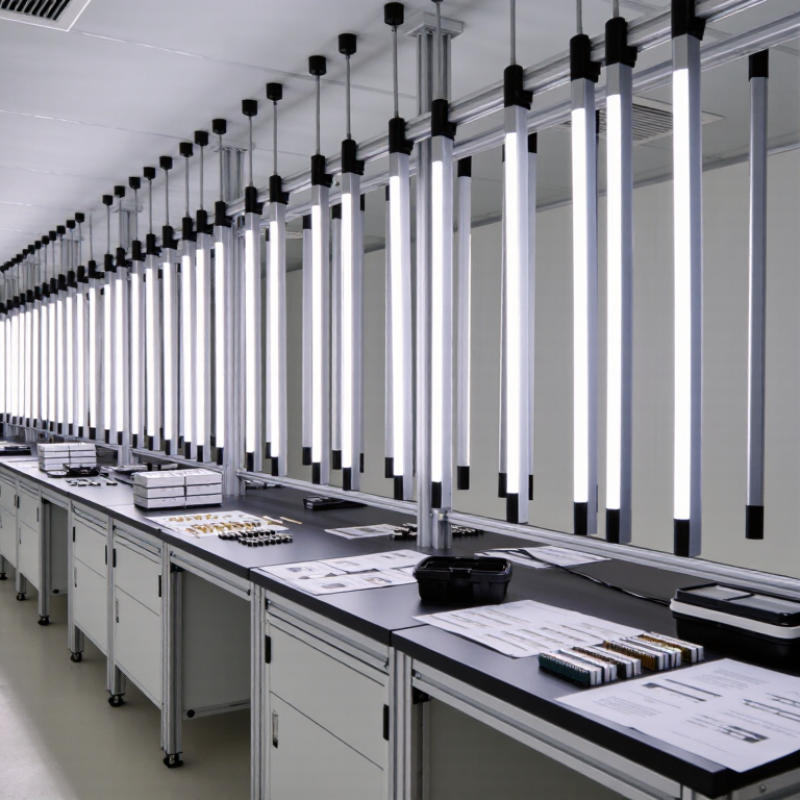
7 LED Linear Module Buying Tips for Global Buyers

Understanding LED Linear Modules and Their Intended Applications

An LED linear module is a long, narrow light engine, usually built around a circuit board, LEDs, and thermal components. Some modules also include optics that shape the beam. Unlike a complete luminaire, a module may need a separate driver, housing, and diffuser. A useful distinction.

These modules serve office troffers, warehouse battens, display cases, and cove lighting. Match the module to the fixture and task: check its length, electrical requirements, color temperature, color rendering, dimming compatibility, and heat management. A warehouse aisle may need broad, even illumination; a retail shelf may need controlled light with accurate color. Modules that look alike are not necessarily interchangeable, and installation space can be tighter than drawings suggest.

The U.S. Department of Energy’s Energy Saver guidance states that LEDs use at least 75% less energy and can last up to 25 times longer than incandescent lighting. This is a broad LED technology comparison, not a guarantee for every linear module. Actual performance depends on the driver, operating temperature, and use pattern. Check the manufacturer’s test data and operating conditions before comparing figures. Sources: U.S. Department of Energy, Energy Saver, “LED Lighting.”


Matching Light Output, Color, and Electrical Requirements

Specify delivered lumens, not just the LED module’s rated output. A diffuser, lens, and operating temperature can reduce usable light. Ask for test data at the intended drive current and ambient temperature. Check the bare module.

DOE Energy Saver guidance says LEDs use at least 75% less energy and can last up to 25 times longer than incandescent bulbs. That comparison is useful context, not a performance guarantee for a linear module. For lifetime claims, review LM-80 measurements and distinguish them from TM-21 projections.

Color needs equal care. State the target CCT, CRI, and acceptable color variation, then request the actual binning range. A nominal 4000 K label can hide visible differences between modules on one ceiling. Measure it warm.

One detail buyers sometimes overlook: ask whether color data were measured at the same current and temperature as the quoted lumen output. That assumption can be wrong.

Match the module to the driver’s constant-current or constant-voltage output, operating range, dimming method, and connector polarity. Confirm input voltage for each destination market, plus power factor and total harmonic distortion where project specifications require them.

The U.S. Department of Energy’s solid-state lighting research guidance discusses how thermal, optical, and driver losses affect system performance. Request complete module-and-driver data, not chip efficacy alone; a tidy specification sheet can still leave compatibility gaps.

Assessing Thermal Design, Materials, and Expected Lifespan

A linear LED module can look well engineered and still run too hot in a closed channel. Ask for thermal test data at the stated drive current and ambient temperature. Check where temperatures were measured, not just the final number. During evaluation, run the module until readings stabilize, then inspect the board and housing with a contact probe. Small details matter. A thin thermal interface or uneven mounting surface can trap heat and shorten service life.

Review the material stack. An aluminum-core PCB can help spread heat, but its value depends on the board design and contact with the heat sink. Ask about solder quality, coating thickness, and corrosion resistance if modules will face humid or coastal conditions. Request samples and examine cut edges, screw points, and cable joints. These checks are useful, though they cannot replace controlled testing.

Treat lifespan figures as estimates, not guarantees. Ask whether the data describes the LED package or the complete module, and request the test conditions behind any projection. Heat, switching frequency, dust, and driver quality all affect real-world performance. A module rated for many hours may not match that figure in a poorly ventilated enclosure. That distinction is easy to overlook. Compare warranty terms with the stated operating temperature and expected duty cycle, and keep the test report with procurement records.

Verifying Product Certifications and Regional Compliance

For global buyers, certification is not a logo check; it is a model-by-model evidence check. The IEA’s Energy Efficiency 2023 report estimates that LEDs represented about half of global lighting sales in 2022, making reliable documentation increasingly important across supply chains. A certificate may cover only a specific module, driver, or thermal configuration. Match the tested model number, input voltage, colour temperature, and wiring diagram against the quotation and production sample. Small differences matter.

Check the destination market’s current requirements instead of relying on one “global” certificate. For the EU, request the applicable conformity declaration and supporting safety, EMC, and restricted-substance evidence; confirm whether the module was assessed with its driver. In North America, verify the applicable electrical-safety route and accepted testing body. Other regions may require local marks or registrations. IEC 62717 performance data can help compare LED modules, but it does not replace market-specific approvals. Check the scope. Ask for complete test reports, certificate details, and a traceable production label. A missing model suffix can break the paper trail. Even a tidy document pack may hide a mismatch, so compare it with the actual unit before shipment.

7 LED Linear Module Buying Tips for Global Buyers — Verifying Product Certifications and Regional Compliance

# Buying Tip Market or Standard to Check Evidence to Request Key Verification Point
1 Define the exact product and installation type. Confirm whether you are buying a standalone LED module, a module with an integrated controlgear, or a complete luminaire. Applicable safety and EMC rules depend on the product’s design, input voltage, intended use, and how it will be installed. Product specification, wiring diagram, installation instructions, and a clear list of included components. Do not assume a module’s approval automatically covers the finished luminaire. The complete assembly may need its own assessment.
2 Check EU/EEA conformity for the exact model. Confirm which EU legislation applies rather than relying on a CE logo alone. Depending on product scope: the EMC Directive (2014/30/EU), RoHS Directive (2011/65/EU), and the Low Voltage Directive (2014/35/EU) when its voltage thresholds are met. IEC/EN IEC 62031 may be relevant to LED modules; EMC standards such as EN IEC 55015 and EN IEC 61547 may apply to lighting equipment. EU Declaration of Conformity, supporting test reports, and technical documentation identifying the model and applicable requirements. Check that the declaration names the correct product and manufacturer, and that cited standards and editions are appropriate and current. CE marking is the manufacturer’s conformity declaration, not by itself proof of independent certification.
3 Confirm the rules for the destination within the UK. Great Britain and Northern Ireland can have different product-marking arrangements. For Great Britain, verify the current rules for the product and relevant legislation; CE marking is accepted under many GB product regimes. Northern Ireland has separate arrangements, including CE or CE and UKNI in applicable cases. Applicable declaration of conformity, technical documentation, product labels, and the importer or responsible economic operator details where required. Check current UK government guidance for the product category and destination. Do not assume that one marking or declaration automatically covers every part of the UK.
4 Distinguish a listed product from a recognized component in the United States. UL 8750 covers LED equipment for use in lighting products; UL 1598 is a relevant luminaire standard. Applicable requirements depend on the finished product and installation. Certification directory entry, listing or recognition details, and the certification file information for the exact model. A component-recognition mark does not necessarily mean the standalone module or completed luminaire is listed. Check the certification scope and local authority requirements.
5 Request Canadian-market certification evidence. Verify that the certification is valid for Canada, not only for the United States. Canadian electrical requirements and applicable CSA or Canadian-adopted standards depend on product type and intended installation. Certificate or directory record from an appropriately accredited certification body, with the Canadian standard and model coverage identified. Check the certification mark’s scope and Canadian suitability. US-only certification does not establish compliance with Canadian requirements.
6 Check supplier and equipment obligations in Australia and New Zealand. Confirm how the product is classified before shipment. RCM requirements and, where applicable, the Electrical Equipment Safety System (EESS) obligations depend on the equipment’s classification and the responsible supplier. Relevant test reports, supplier registration details where required, and evidence that required marking and documentation are in place. Ask who is the responsible supplier in the market and whether the module or the finished luminaire is the regulated supply item.
7 Match every certificate and test report to the goods being purchased. Verify model numbers, ratings, and production details before approving an order. For all markets: compare the paperwork with the nameplate, datasheet, wiring, LED configuration, driver, and intended operating conditions. Certificate verification record, current datasheet, label artwork, bill of materials or controlled configuration, and batch traceability information. Confirm that changes to the driver, components, ratings, or construction have not taken the supplied product outside the tested or certified configuration.

Comparing Suppliers, Samples, Pricing, and International Shipping

When comparing LED linear module suppliers, request matching specifications: length, input voltage, CCT, CRI, efficacy, and dimming method. Then compare test conditions, not just headline figures. Ask for LM-80 data and TM-21 projections where applicable, plus thermal test details. A module tested in open air may behave differently inside a narrow metal channel. The U.S. Department of Energy reports that LEDs use at least 75% less energy than incandescent lighting; this broad comparison is useful context, not a module-level guarantee.

Order samples from shortlisted suppliers and test them in your actual fixture. Check light uniformity, color consistency, flicker, and heat after several hours. Keep one sample for comparison. I still treat a polished sample as only a first clue. Confirm production tolerances and batch controls before approving a large order, since small color shifts can stand out along a continuous ceiling run.

Compare total landed cost, not unit price alone. Include drivers, custom lengths, minimum order quantities, protective packaging, and freight terms. Ask for carton dimensions and gross weight before booking transport. UNCTAD’s Review of Maritime Transport 2024 notes that over 80% of world trade by volume moves by sea, so port delays can affect project schedules. For each quote, record the shipping method, estimated transit time, insurance, and delivery point. A low quote can still hide a long lead time.

Go to Top