What Is an Electronic Shisha and How Does It Work?
Electronic Shisha is a broad term for an electronic device designed to deliver flavored aerosol through a mouthpiece. Unlike traditional shisha, it does not burn charcoal or tobacco in a bowl. Most models use a battery, a heating element, and a liquid reservoir, though designs and ingredients can differ. The details vary. When activated, the battery powers the heater, which warms the liquid and creates an aerosol that travels through the device’s airflow path. A user then draws it through the mouthpiece. Not smoke, exactly. That distinction matters, but it does not mean the aerosol is harmless.
Understanding how an Electronic Shisha works also means looking at what it contains. Some liquids include nicotine, while others are marketed as nicotine-free; labels and product details should be checked rather than assumed. Nicotine is addictive, and inhaled aerosols may contain substances that can affect health. Device performance, ingredients, and labeling can vary, so broad claims about every model are unreliable. A clear overview should explain the battery, heater, liquid, and airflow without presenting the device as risk-free or recommending its use. There is some uncertainty, too: product names can be inconsistent, and a familiar flavor tells you little about the ingredients. This guide explores the basic components and process, while keeping those limits in view.
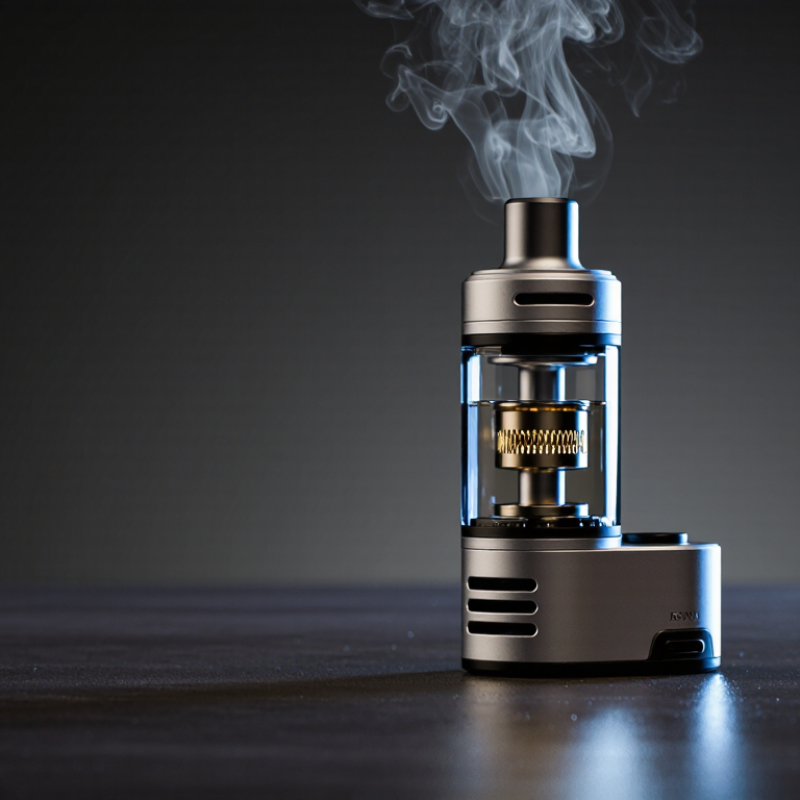
What an Electronic Shisha Is: A Battery-Powered, E-Liquid Aerosol Device
An electronic shisha is a battery-powered device that heats e-liquid to create an aerosol, which is drawn through a mouthpiece. It does not burn charcoal or produce ordinary water vapor. Inside, a small heating element warms liquid held in a cartridge or tank; airflow may activate the device, or a button may control it. The aerosol can look like a soft cloud.
Looks can mislead.
E-liquids commonly contain propylene glycol, vegetable glycerin, and flavorings; some also contain nicotine. The National Academies’ 2018 report, Public Health Consequences of E-Cigarettes, describes aerosol as a mixture that can include potentially harmful substances, with levels affected by the device and liquid. So “aerosol” is the more accurate word than “steam.”
Grand View Research estimated the global e-cigarette and vape market at US$28.17 billion in 2023. That figure measures market value, not product safety or how many people use electronic shishas.
Device design and liquid composition vary, and that uncertainty deserves attention.
A neat cloud tells you very little.
Core Components: Battery, Control Circuit, Heating Coil, and Liquid Reservoir
An electronic shisha uses a battery to power a small heating coil. The control circuit manages that power and, in many devices, responds to a button or airflow sensor. The liquid reservoir holds the fluid; a wick draws it toward the coil. When heated, the liquid forms an aerosol, not harmless water vapor. Look closely at the mouthpiece: tiny airflow openings help carry that aerosol through the device. Simple parts, but their interaction matters.
The battery supplies energy, while the control circuit helps prevent inconsistent heating. The coil’s temperature and the liquid’s composition influence the aerosol produced. The National Academies’ 2018 report, Public Health Consequences of E-Cigarettes, found substantial evidence that device power and user behavior affect nicotine exposure. That is an important engineering point, though it does not tell us exactly what any one device emits. WHO estimated in 2024 that at least 100 million people worldwide use e-cigarettes, including 86 million adults and 15 million adolescents. Scale matters. A limitation is easy to overlook: a reservoir’s appearance cannot confirm what is in the liquid, and component designs vary.
How Airflow Carries Aerosol Through the Mouthpiece During a Puff
What Is an Electronic Shisha and How Does It Work?
During a puff, airflow draws through the device and passes its heated liquid reservoir. The heater forms an aerosol, which mixes with incoming air and travels along an internal channel toward the mouthpiece. You feel the draw as air moves past the opening and into your mouth. It is not simply water vapor; aerosol can contain particles and other substances. Its makeup depends on the liquid, device, and heating conditions.
A useful technical reference is CORESTA Recommended Method No. 81, a laboratory method for generating and collecting e-cigarette aerosol. It specifies a 55-milliliter puff lasting three seconds, with 30 seconds between puffs. These settings help standardize testing; real draws vary in strength and duration. Air channels also differ, so this is a simplified picture. I might once have assumed a longer draw always means more aerosol, but device output and airflow can complicate that.
Tips: Keep the mouthpiece opening clear, and use a gentle, steady draw. If airflow feels restricted or unusually hot, stop and check the device instructions. Don’t force it.
What Is an Electronic Shisha and How Does It Work?
How Airflow Carries Aerosol Through the Mouthpiece During a Puff
In an electronic shisha, inhalation draws air through the device and carries aerosol produced by heating liquid toward the mouthpiece. This conceptual waveform shows how airflow may rise during a puff and fall afterward; it is illustrative, not measured device data. Actual airflow varies by device and puff.
ISO 20768 Reference Testing: 55 mL Puffs, 3 Seconds Long, Every 30 Seconds
An electronic shisha uses a battery to power a heating element. The element warms a liquid and produces an aerosol that travels through the mouthpiece. Its output can vary with airflow, battery level, and device design. The familiar shape does not make every device behave alike.
ISO 20768 reference testing uses a defined puff pattern: 55 millilitres per puff, three seconds per puff, and one puff every 30 seconds. A testing machine draws each puff at a controlled volume and pace. That rhythm helps laboratories compare aerosol measurements under repeatable conditions. A steady cycle matters.
But it is a laboratory setting, not a description of every person’s use. Real puffs may be shorter, longer, or closer together. Results can also depend on the test setup and the sample collected. One limitation is easy to overlook: a precise machine cannot capture every variation in everyday use. Useful, but not the whole picture.
What Is an Electronic Shisha and How Does It Work? - ISO 20768 Reference Testing: 55 mL Puffs, 3 Seconds Long, Every 30 Seconds
| Aspect | Description | Reference information |
| What it is | An electronic shisha is a type of electronic vaping device designed to produce an inhalable aerosol from a liquid, rather than smoke from burning tobacco or charcoal. | “Electronic shisha” is a descriptive term; device designs and liquid contents can vary. |
| Power source | A battery supplies electrical energy to the device’s heating element when the device is activated. | Battery capacity and operating behavior are product-specific. |
| Aerosol formation | The heater warms liquid supplied to it, generating an aerosol that can be drawn through the mouthpiece. | Aerosol is not simply water vapour; its composition depends on the device and liquid. |
| Typical components | Common components include a battery, control electronics, a heater, a liquid reservoir or cartridge, and an airflow path with a mouthpiece. | Not every device uses the same component arrangement. |
| ISO reference standard | ISO 20768:2018 specifies a routine analytical vaping machine and standard conditions for generating vapour-product aerosol for testing. | It is a laboratory testing reference, not a statement of how people should use a device. |
| Puff volume | 55 mL per puff | Nominal volume used in the ISO 20768 reference puffing regime. |
| Puff duration | 3 seconds per puff | The specified duration for each machine-drawn puff. |
| Interval between puffs | 30 seconds | The reference interval between successive puffs in the test sequence. |
| Purpose of the puffing regime | A controlled machine-generated puff sequence helps laboratories collect aerosol under repeatable conditions for analysis. | Standardized testing supports comparison under defined conditions; it does not reproduce every individual use pattern. |
| Interpreting test results | Results describe material collected from aerosol generated during the stated laboratory procedure. | Machine emissions are not the same as a person’s actual exposure or absorbed dose. |
Note: The ISO 20768 puffing conditions shown are reference laboratory parameters. They should not be interpreted as recommended consumer-use instructions.