Choosing the best Rtls Tags in 2026 requires more than comparing prices, battery ratings, or advertising claims. The right tag must fit the physical environment, tracking purpose, and operational workflow. A tag attached to a hospital infusion pump faces different demands than one fixed to a steel pallet in a refrigerated warehouse. Walls, metal surfaces, moisture, vibration, and human movement can all affect performance.
Tim Zimmerman, a recognized RTLS specialist, offers a practical principle: “A location system is only as valuable as the business process it improves.” That idea should guide every buying decision. Before selecting Rtls Tags, define the required accuracy. Room-level visibility may be enough for hospital equipment. A manufacturing robot may need sub-meter precision and rapid updates. Battery life also deserves careful attention. A tag that promises three years may deliver less in high-frequency tracking conditions.
Technology choices create trade-offs. Bluetooth Low Energy tags can support flexible deployments and lower costs. UWB tags can provide more precise positioning, but they usually require additional infrastructure. Passive RFID tags may work well for simple identification, while active tags support continuous location updates. No option wins every test. That is the uncomfortable part.
A reliable evaluation should include live trials, not only datasheets. Test tags beside metal racks, inside storage rooms, and near moving machinery. Measure accuracy, update speed, signal stability, maintenance effort, and integration quality. Also examine how easily staff can replace batteries or attach tags securely. Small failures matter. A loose tag, missed scan, or delayed alert can weaken an otherwise impressive RTLS investment.
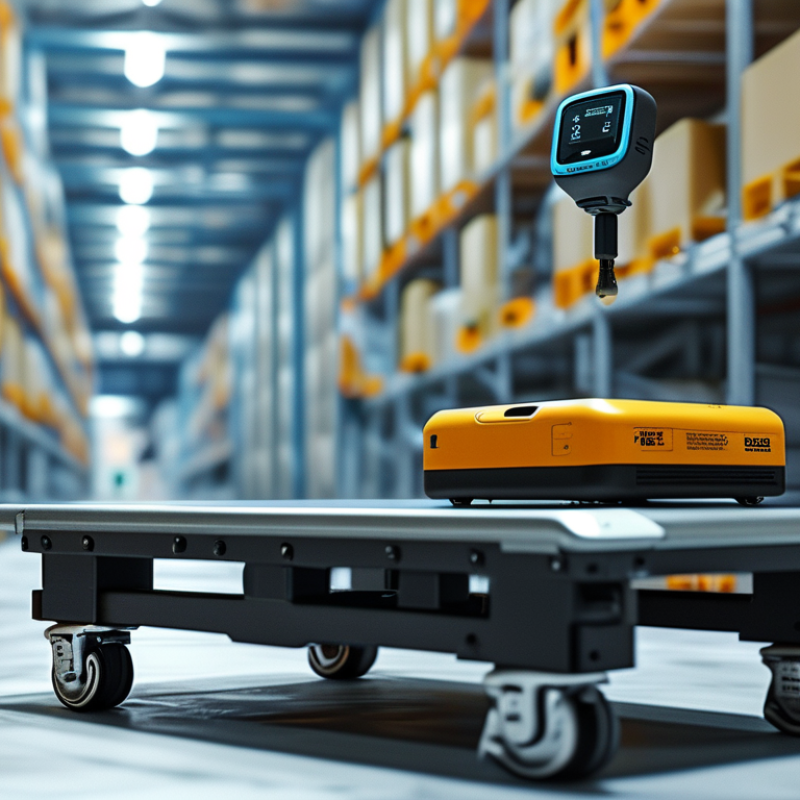
RTLS tags differ by location method, battery life, accuracy, and installation burden. Passive RFID tags are inexpensive and maintenance-free, but readers must detect them nearby. Active RFID tags transmit regularly and support longer ranges. Bluetooth Low Energy tags reduce power consumption and suit carts, tools, and staff badges. The Bluetooth SIG 2024 Market Update forecasts 5.4 billion annual Bluetooth device shipments in 2024, reaching 7.0 billion by 2028. That scale supports wider hardware availability.
The physics matters. UWB tags can achieve roughly 10–30 centimeter accuracy in controlled spaces, according to the FiRa Consortium’s technical materials. They need more anchors and careful calibration. Wi-Fi tags may reuse existing infrastructure, but dense metal shelving can create unstable readings. Infrared and ultrasound can improve room-level precision, yet their coverage usually demands more infrastructure. A 2024 RTLS market forecast from MarketsandMarkets estimates growth from about USD 6.1 billion in 2024 to USD 16.7 billion by 2029.
Start with the movement pattern, not the tag brochure. A pallet crossing one doorway needs different technology from a technician moving through corridors. Check update intervals, battery replacement time, enclosure ratings, and reader visibility. Test tags beside steel racks, cold rooms, and moving machinery. Lab accuracy can look impressive. Real facilities are less polite. I would also question whether centimeter-level precision creates measurable value, because higher accuracy often increases cost, maintenance, and system complexity.

Tag selection should begin with the required accuracy, not the technology label. Grand View Research estimates the RTLS market could grow at a 26.6% CAGR from 2023 to 2030. That growth reflects wider adoption across hospitals, factories, and warehouses. However, bigger market numbers do not guarantee better location data.
For room-level visibility, Bluetooth Low Energy tags can provide practical, lower-cost tracking. They suit equipment zones, staff movement, and basic inventory control. For aisle-level positioning, active RFID or Wi-Fi tags may offer better range and battery flexibility. UWB tags can reach approximately 10–30 centimetres in controlled environments, making them suitable for robotic carts, surgical assets, and collision-sensitive workflows. MarketsandMarkets projects the RTLS market to exceed 13 billion dollars by 2028, but accuracy still depends on site design, signal reflection, and calibration.
Battery life needs equal attention. A tag transmitting every second may improve responsiveness, yet it can drain quickly. Motion sensors, adjustable reporting intervals, and temperature tolerance often matter more than headline accuracy. In practical deployments, metal shelving and crowded corridors create unexpected errors. I have seen teams choose centimetre-level tags for simple room tracking. That was excessive. A cheaper tag would have worked. The uncomfortable lesson is clear: test tags inside the real facility, during busy hours, before committing to a large rollout.
How to Choose the Best RTLS Tags in 2026?
Choosing an RTLS tag starts with operating conditions, not a feature list. The Bluetooth SIG 2024 Market Update projects annual location-service device shipments rising from 1.3 billion in 2023 to 2.8 billion in 2028. This growth supports mature connectivity, but radio range still changes inside concrete wards. Compare BLE, ultra-wideband, Wi-Fi, and passive RFID against your accuracy needs. A two-meter error may suit a warehouse zone. It may fail beside a moving medical cart. Battery claims also need context. Ask for life at your reporting interval, temperature, movement rate, and power settings. A tag transmitting every second will not match one checking in every five minutes.
Durability is equally practical. Review IP ratings, drop testing, wash-cycle tolerance, and chemical exposure. Grand View Research’s 2024 RTLS market report forecasts double-digit annual growth through 2030. Fast deployment may create hidden maintenance debt. Check battery replacement time, spare-unit access, firmware updates, and alert quality. A low-cost tag becomes expensive when technicians enter freezers or climb lifts. Accuracy often receives too much attention. Cleaning routines receive too little. That imbalance is easy to repeat.
Tips: Test 20–30 tags for four weeks. Place them near metal racks, doors, and moving equipment. Log missed readings, battery voltage, and damaged housings. Measure accuracy at walking speed, not only on a workbench. Your first shortlist may be wrong. Treat that as useful evidence.
| RTLS Tag Type | Typical Battery Life | Connectivity & Accuracy | Durability Profile | Maintenance Needs | Best-Fit Applications |
|---|---|---|---|---|---|
| Passive RFID | No battery; service life is commonly 10+ years when physically protected. | Short-range reader interaction; usually identification rather than continuous real-time location. Typical read distance is from a few centimeters to several meters, depending on frequency and installation. | Can be supplied as labels, hard tags, or embedded tags. Resistance to water, chemicals, and impact depends heavily on the enclosure. | Very low. Periodic inspection and replacement of damaged tags are normally sufficient. | Inventory checkpoints, product identification, document tracking, and low-cost item-level labeling. |
| Bluetooth Low Energy (BLE) | Approximately 1–5 years for common beacon settings; higher transmit power and faster advertising intervals reduce life. | Uses 2.4 GHz radio and fixed receivers or gateways. Typical room-level accuracy is about 2–10 m; angle-of-arrival installations can improve accuracy. | Compact and widely available in IP-rated housings. Performance can be affected by metal, dense materials, and radio interference. | Low to moderate. Battery replacement, mounting checks, and occasional radio-health verification are required. | Indoor asset tracking, staff safety, tools, carts, equipment, and applications requiring a balance of cost and location coverage. |
| Ultra-Wideband (UWB) | Approximately 3 months to 3 years, depending on update frequency, motion sensing, and whether the tag enters sleep mode. | Provides high-precision ranging. Typical indoor accuracy is about 10–30 cm in a well-designed installation, with higher infrastructure and calibration requirements. | Industrial housings are available, including rugged and IP-rated designs. Radio performance may decline when the signal is blocked by people, machinery, or dense structures. | Moderate to high. Battery planning, anchor checks, firmware management, and periodic calibration are important. | Forklift guidance, high-value equipment, worker positioning, collision prevention, and workflows requiring precise zone or location data. |
| Wi-Fi | Approximately 1–6 months for frequently reporting battery tags; longer life is possible with infrequent updates or larger batteries. | Uses existing wireless infrastructure in many facilities. Typical location accuracy is about 5–15 m, depending on access-point density and positioning method. | Generally suited to indoor environments. Enclosure ratings vary, and continuous radio transmission can increase heat and battery consumption. | Moderate. Requires more frequent battery changes and coordination with wireless-network capacity and security policies. | Connected equipment, hospital assets, enterprise facilities, and sites where an established Wi-Fi network is already available. |
| GNSS / Cellular | Approximately 1–12 months for active tracking; motion-triggered reporting and external power can extend operating time. | Uses satellite positioning with cellular backhaul. Outdoor accuracy is commonly about 3–10 m under open-sky conditions; accuracy can worsen indoors or near tall structures. | Often available in weather-resistant, shock-resistant enclosures. Satellite reception can be obstructed by buildings, roofs, containers, and heavy foliage. | Moderate. Requires battery replacement, cellular subscription management, firmware updates, and enclosure inspections. | Vehicles, trailers, outdoor machinery, shipping containers, and assets moving across locations without fixed local infrastructure. |
| Active RFID | Approximately 1–5 years, depending on transmission interval, range requirements, and battery capacity. | Designed for longer-range active communication with dedicated readers. Accuracy commonly ranges from room-level to several meters, depending on system design. | Rugged versions can support industrial use, including protection against dust, water, and repeated handling. | Low to moderate. Battery replacement schedules and reader inspections should be planned as part of preventive maintenance. | Warehouses, manufacturing sites, healthcare facilities, and large indoor areas requiring dependable long-range presence detection. |
| Selection guidance: Choose the tag technology according to the required accuracy, indoor or outdoor coverage, reporting frequency, expected exposure to water or impact, available infrastructure, and the total cost of battery replacement and system maintenance. Battery-life figures are typical planning ranges; actual performance varies with configuration, temperature, radio conditions, motion activity, and battery quality. | |||||
How to Choose the Best RTLS Tags in 2026?
Evaluating Platform Compatibility, Security, and Total Cost
Choosing an RTLS tag in 2026 starts with the platform, not the casing. Check whether it supports your locating method, gateways, operating system, and data interfaces. A tag that looks affordable can fail when its messages need custom middleware. Test it first. Walk past metal racks, cold rooms, and elevator doors. Record missed detections, battery behavior, and handover time. These details often reveal more than a polished laboratory demonstration. Ask for documented firmware support and realistic integration responsibilities. Vague compatibility claims deserve careful questions.
Security must cover the entire tag lifecycle. Use unique device identities, encrypted communication, signed firmware, and controlled provisioning. Review how lost tags are disabled and how location data is retained. Physical access matters too. Tamper evidence, sealed housing, and a replaceable battery can change operational risk. Request penetration-test summaries, vulnerability reporting procedures, and update timelines. Do not treat certification as proof of perfect security. That assumption is tempting, but incomplete.
Total cost includes more than the purchase price. Model tags, readers, licenses, installation, calibration, batteries, repairs, training, and disposal. Estimate battery replacement in a warehouse where hundreds of tags move daily. Ask how costs change after the pilot. A low-cost tag may need frequent charging or expensive integration work. An expensive tag may reduce labor, but only if its data is trusted. Build a three-year spreadsheet using measured battery life, not optimistic estimates. Leave room for mistakes. Our early estimates are often too neat. Recheck assumptions after thirty days of real use.
Technology-level comparison of common RTLS tag options using normalized scores from 1 (low) to 5 (high). Platform compatibility reflects integration flexibility, security reflects support for authentication and encrypted communication, and total cost efficiency combines tag price, infrastructure requirements, battery maintenance, and deployment effort.
These scores represent typical deployment characteristics rather than any specific vendor or product. Actual results depend on site layout, tag density, required accuracy, network architecture, and security configuration.
The right tag begins with the workflow, not the technology. A cold-storage pallet needs different protection than a hospital wheelchair. Record temperature, dust, impact, cleaning chemicals, and expected movement before comparing specifications. MarketsandMarkets forecasts the RTLS market will grow from about USD 6.1 billion in 2024 to USD 14.3 billion by 2029. That growth increases choice, but it also increases deployment risk. Start with the workflow.
Choose tags around measurable outcomes. Define acceptable location accuracy, update intervals, battery life, and mounting methods. A moving tool may need frequent updates, while a seldom-used emergency asset needs long standby time. Consider BLE, ultra-wideband, RFID, or hybrid architectures according to building density and required precision. ABI Research has identified industrial asset tracking as a major RTLS application area, supporting stronger demand for scalable deployments. Yet forecasts are not installation plans.
Deploy a small pilot across one corridor, storage zone, or production cell. Measure missed reads, battery drain, false movement alerts, and cleaning damage for several weeks. In real facilities, metal racks and human traffic can distort signals. Keep spare tags available. This detail is often ignored. Security also matters; use controlled access, encrypted communication, and documented retention rules. Review results with operators, not only engineers. The first design may be wrong. That is useful evidence. Adjust tag placement, gateway density, and alert thresholds before expanding. Cite: MarketsandMarkets, RTLS Market, 2024; ABI Research, RTLS and Asset Tracking research.
© 2023 JEM Electronics, Inc. – United States Cable Assembly. All rights reserved.