What is Cable Assembly and How is it Used in Modern Technology
In the realm of modern technology, cable assemblies play a pivotal role in ensuring seamless connectivity and functionality across various devices and systems. According to a recent report by Market Research Future, the global cable assembly market is expected to reach over $200 billion by 2025, driven by the increasing demand for advanced electronic devices and communication systems. This exponential growth highlights the critical need for reliable and efficient cable assembly solutions in sectors such as telecommunications, aerospace, and automotive.
As industry expert John Smith, a recognized figure in the field of cable manufacturing, aptly stated, "Cable assembly is the backbone of modern electronics, providing the essential connections that enable innovation and advancement." His words resonate within a landscape where technological integration is paramount, making cable assemblies not just components but integral parts of the systems that power our daily lives. With the rise of IoT devices and smart technologies, understanding the complexities and applications of cable assembly becomes increasingly important for businesses aiming to stay ahead in a competitive market.

Definition and Explanation of Cable Assembly in Technology
Cable assembly plays a crucial role in modern technology by serving as the backbone for electrical and electronic systems. At its core, cable assembly refers to the process of assembling various wires, connectors, and other components into a single cohesive unit that facilitates the transmission of electrical signals or power. This not only ensures a reliable connection but also optimizes space within devices, allowing for more compact and efficient designs.
In technology applications, cable assemblies are utilized across various sectors, including telecommunications, automotive, and industrial machinery. They can range from simple wire harnesses found in household appliances to complex systems used in data centers and aerospace. The design and manufacturing process involves selecting appropriate materials, ensuring compatibility with different interfaces, and adhering to safety and performance standards. Thus, cable assemblies are integral to enabling communication, enhancing functionality, and improving the overall performance of modern technologies.
What is Cable Assembly and How is it Used in Modern Technology
| Aspect |
Description |
| Definition |
A cable assembly is a collection of cables and connectors that are assembled together to fulfill a specific function. |
| Components |
Includes wires, connectors, insulation, and strain reliefs. |
| Uses in Technology |
Used in various fields such as telecommunications, automotive, aerospace, and consumer electronics. |
| Benefits |
Provides flexibility, reduces installation time, and improves reliability of connections. |
| Customizations |
Can be customized for different lengths, colors, and connector types to meet specific needs. |
Components and Materials Used in Cable Assembly Manufacturing
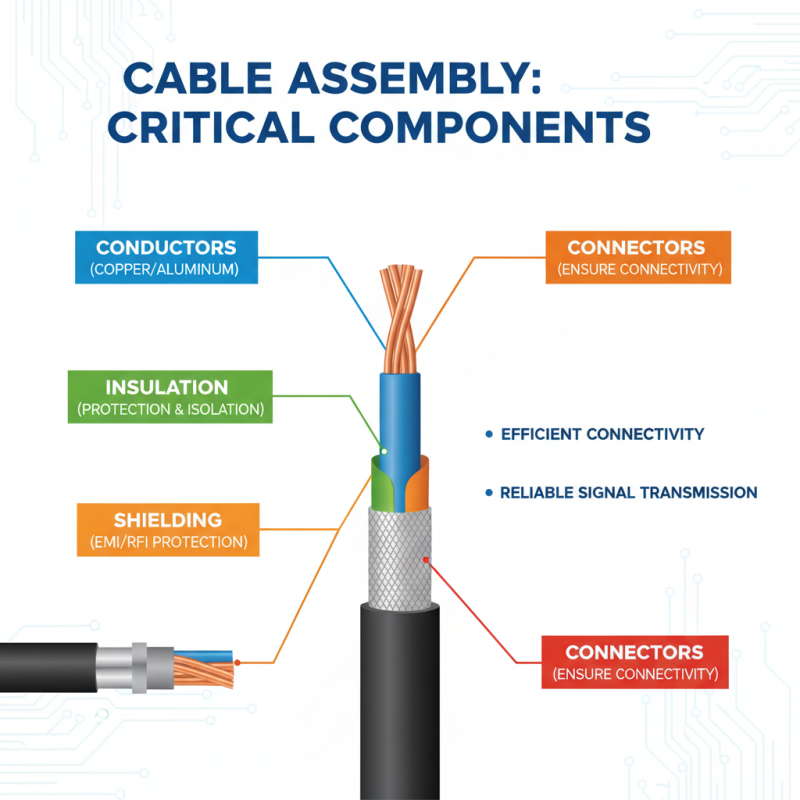
Cable assembly is a critical component in modern technology, composed of various components and materials that ensure efficient connectivity and functionality. The primary elements of a cable assembly include conductors, insulation, shielding, and connectors. Conductors, typically made from copper or aluminum, facilitate electrical signals. These materials are chosen for their excellent conductivity and flexibility, allowing for reliable transmission even in challenging environments.
Insulation materials, such as PVC, polyethylene, or Teflon, are essential for protecting conductors from physical damage and electrical interference. They prevent short circuits and ensure the safe operation of electronic devices. Shielding, made from materials like foil or braided wire, further enhances performance by minimizing electromagnetic interference, which is crucial in high-frequency applications. Lastly, connectors, ranging from standard to custom designs, play a vital role in ensuring secure and efficient connections between devices, tailored to meet the specific needs of various technological systems. Together, these components work seamlessly to create cable assemblies that support the ever-evolving landscape of modern technology.
Applications of Cable Assembly in Various Industries
Cable assemblies play a crucial role in various industries, providing the necessary infrastructure for electrical connectivity. In the telecommunications sector, they are integral for transmitting data over long distances, ensuring high-speed internet connections and seamless communication systems. The intricate design of cable assemblies enables them to support different frequencies and adapt to numerous network requirements, making them indispensable in the ever-evolving landscape of modern communication.
In the automotive industry, the use of cable assemblies is equally significant. They are essential for connecting various electrical components, such as sensors, ignition systems, and entertainment systems within vehicles. With the rise of electric vehicles and advanced driver-assistance systems (ADAS), cable assemblies are engineered to handle higher power loads and manage complex data communications. This evolution not only enhances vehicle performance but also improves safety and user experience, highlighting the adaptability and importance of cable assemblies across multiple sectors.
Applications of Cable Assembly in Various Industries
Importance of Cable Assembly in Modern Electronics and Communication
Cable assemblies play a crucial role in modern electronics and communication systems, acting as the backbone that connects various devices and components. According to a report by MarketsandMarkets, the global cable assembly market is expected to reach approximately $360 billion by 2027, driven by the soaring demand for high-speed data transmission in sectors such as telecommunications, aerospace, and automotive. These assemblies ensure reliable and efficient connectivity, making them indispensable in the fabrication of electronic devices.
In the realm of communication, cable assemblies are vital for transmitting signals effectively, supporting advancements in smart technologies and IoT applications. The rise of 5G technology further emphasizes the need for high-quality cable assemblies, as they facilitate faster data transfer rates and lower latency. Industry analysts project that 5G investments will reach $1 trillion by 2025, underlining the strategic importance of cable assembly in enhancing communication infrastructures worldwide.
Tips: When selecting cable assemblies for your projects, always consider factors such as temperature tolerance, flexibility, and shield effectiveness to ensure optimal performance. Additionally, collaborating with trusted suppliers who adhere to industry standards can significantly affect the long-term reliability and safety of your electronic applications.
Future Trends in Cable Assembly Technology and Innovation
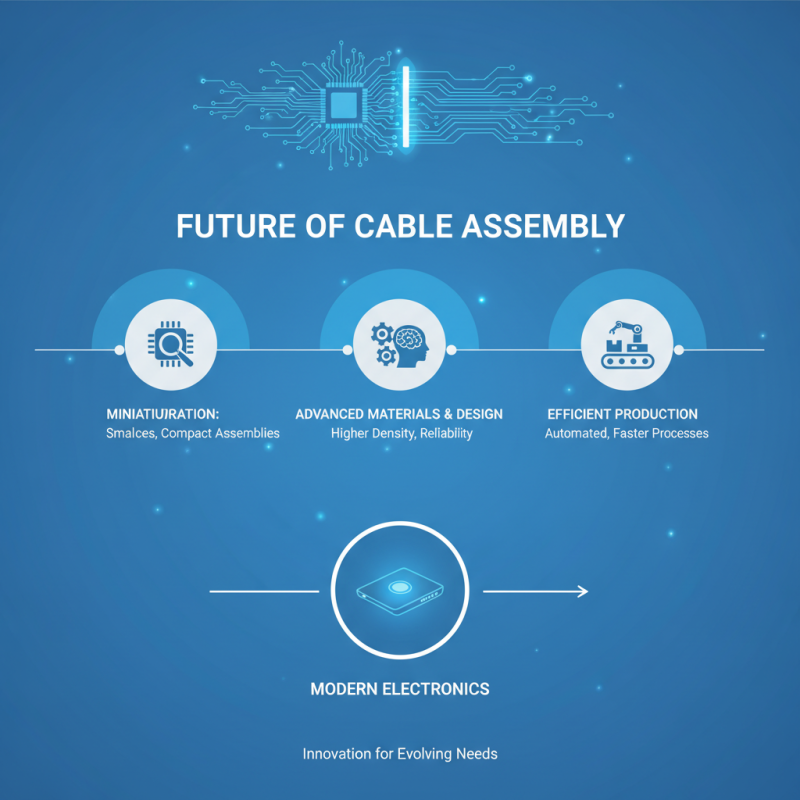
The future of cable assembly technology is being shaped by significant innovations and trends that cater to the ever-evolving needs of modern electronics. One of the foremost trends is the increasing miniaturization of electronic devices. Manufacturers are now focusing on producing compact, high-density cable assemblies that can fit into smaller form factors while maintaining performance and reliability. This demand drives advancements in materials and design methodologies, pushing the boundaries of traditional assembly techniques and leading to more efficient production processes.
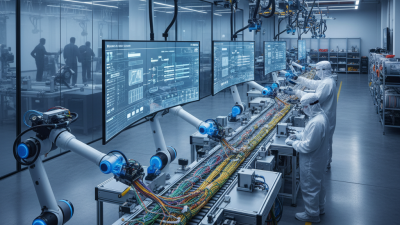
Moreover, the rise of automation and smart technologies is transforming cable assembly operations. The integration of robotics and AI in manufacturing not only enhances precision but also reduces lead times and operational costs. Additionally, advancements in smart cables equipped with integrated sensors for monitoring performance are gaining traction. These innovations enable real-time data collection, contributing to smarter network management and predictive maintenance. As industries increasingly adopt IoT solutions, the evolution of cable assembly technology will play a critical role in ensuring seamless connectivity and functionality in an interconnected world.