What Is the Best 35kV Power Transformer in 2026?
Choosing the best 35kv Power Transformer in 2026 requires more than comparing purchase prices or nameplate ratings. A reliable choice must match the network’s voltage profile, load pattern, installation environment, and future expansion plans. Utility engineers usually examine efficiency, insulation performance, cooling design, short-circuit strength, noise, and maintenance access. Small details matter. A loose terminal can become a costly outage.
This guide introduces practical criteria for evaluating modern 35kV transformers across industrial plants, renewable energy sites, substations, and commercial networks. It considers proven designs, factory testing, service records, spare-parts availability, and manufacturer support. Compliance with applicable IEC or IEEE requirements also deserves close attention, although certification alone cannot guarantee dependable field performance. Site conditions may expose weaknesses that laboratory results miss.
There is no universal winner. A transformer performing well in a dry indoor substation may struggle in a humid coastal environment. Likewise, the lowest-loss model may not deliver the lowest lifetime cost if servicing is difficult. That point is easy to overlook.
The discussion will compare oil-immersed and dry-type options, cooling methods, protection features, smart monitoring, and total ownership costs. It will also examine realistic selection mistakes, because even experienced teams sometimes trust incomplete specifications. Readers should verify technical data with qualified engineers and request independent test documentation before purchasing. Good decisions begin with evidence, not attractive brochures. Reliability is built gradually, through design discipline, manufacturing control, careful installation, and responsive after-sales service.
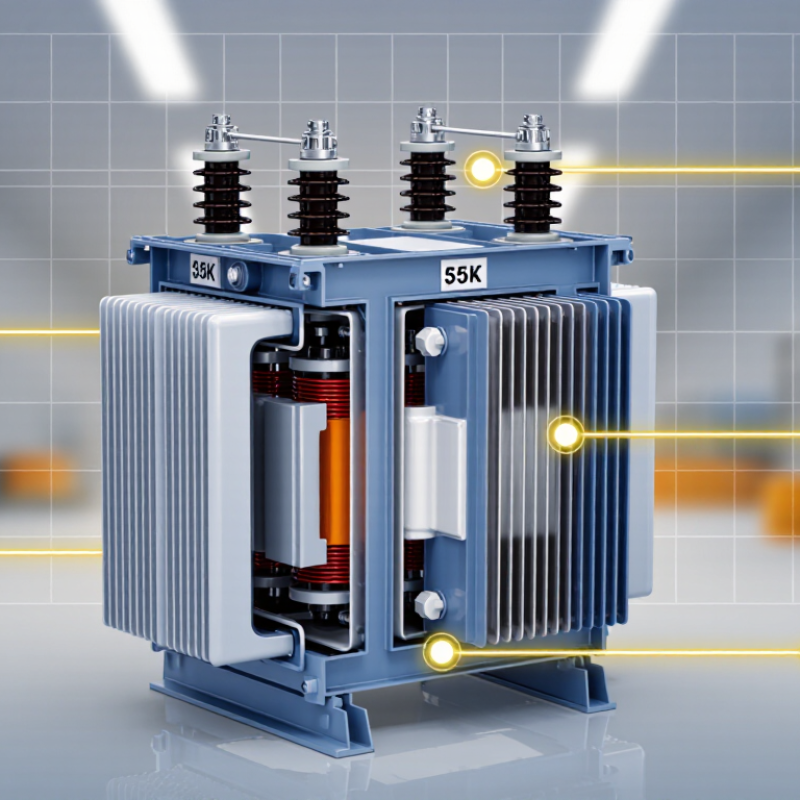
35kV Power Transformers: Definition, Purpose, and Core Applications
A 35kV power transformer is a static electrical device that transfers energy between voltage levels through electromagnetic induction. The “35kV” label usually describes its insulation and voltage class, not every operating voltage. Under the IEC 60076 series, engineers assess insulation, temperature rise, short-circuit strength, and load performance. Typical units step medium-voltage power down for factories, substations, renewable-energy sites, and large commercial facilities.
Its purpose is practical: reduce transmission losses, isolate circuits, and deliver usable voltage safely. A 35kV transformer may supply 10kV, 6.6kV, or low-voltage distribution systems. Field inspections often reveal small details that matter, including cable bending space, oil temperature, earthing quality, and noise near occupied buildings. Poor ventilation can shorten service life. The best design is therefore site-dependent, not simply the largest or most efficient model.
The U.S. Department of Energy reported that distribution-transformer losses represent about 2.5% of national electricity consumption. That makes efficiency a measurable operating concern, not a marketing phrase. The IEA’s Electricity 2024 report also projected global electricity demand growth of about 4% in 2024, increasing pressure on grid equipment. Yet real projects remain imperfect. Load forecasts change. Space is limited. Maintenance budgets vary. For 2026, buyers should compare verified loss data, insulation coordination, cooling capacity, monitoring options, and lifecycle cost against the actual network profile.
Key Technical Specifications for Evaluating 35kV Transformers
A 35kV transformer should be evaluated through operating data, not appearance or nameplate power alone. Rated capacity must match the load profile, future expansion, and daily peak demand. Oversizing improves reserve capacity but may increase no-load losses and purchase cost.
Key specifications include the voltage ratio, impedance, frequency, vector group, and tap-changing range. Impedance affects fault current and voltage regulation. A practical design usually requires careful coordination with upstream protection equipment. Insulation performance also deserves close attention. Check the lightning impulse withstand level, power-frequency withstand, and partial discharge results. These values reveal weaknesses that visual inspections cannot identify.
Temperature rise, cooling performance, and winding material influence service life. Review guaranteed load losses, no-load losses, efficiency, and sound pressure at the installation boundary. In humid or dusty sites, enclosure protection and corrosion resistance become important. IEC 60076 test documentation can support a more reliable comparison, but certificates should match the exact transformer design. Small errors matter.
Field assessments sometimes focus too heavily on efficiency while ignoring maintenance access. That can create unnecessary downtime. Verify oil quality requirements, bushing clearances, monitoring points, and spare-part availability before approval. A perfect transformer does not exist. The best 35kV choice balances electrical performance, site conditions, safety margins, lifecycle cost, and the limits of the actual grid.
What Is the Best 35 kV Power Transformer in 2026?
Key technical specifications for evaluating typical 35 kV three-phase power transformers
The chart compares representative no-load and load losses across common transformer ratings. A suitable 35 kV transformer should balance rated capacity, total losses, impedance, cooling performance, insulation level, voltage regulation, and compliance with IEC 60076 requirements. Lower losses generally indicate better operating efficiency, while the final selection must also consider system fault levels, duty cycle, ambient conditions, and maintenance requirements.
Data shown are representative engineering values for oil-immersed 35 kV class transformers and are not associated with any manufacturer or brand.
Top Transformer Designs and Their Performance Differences in 2026
Selecting the best 35kV power transformer in 2026 depends on design priorities, not appearance. Core-form transformers remain popular because they offer efficient magnetic paths and familiar maintenance procedures. Shell-form designs provide strong short-circuit resistance and compact construction. However, their internal repair work can be more demanding. Field engineers should compare tested impedance, thermal limits, acoustic output, and service access.
Amorphous-core designs reduce no-load losses, which matters for continuously energized substations. The saving is measurable, but the purchase cost and mechanical handling may be higher. Conventional oil insulation still supports reliable cooling and proven maintenance routines. Natural ester fluids offer higher fire resistance and improved biodegradability. Their greater viscosity can affect cooling performance in cold climates. Small details matter.
Digital monitoring changes the performance discussion. Fiber-optic temperature sensors, bushing monitors, and dissolved-gas analysis can reveal developing faults earlier. Online data is valuable, but poor sensor calibration can create false confidence. It happens. On-load tap changers improve voltage control during changing demand, while forced-air cooling supports short periods of heavier loading. Engineers should verify these benefits through factory tests, insulation tests, temperature-rise tests, and site acceptance checks. IEC or IEEE-based procedures improve comparability, although results still depend on test conditions. A transformer performing well at sea level may need derating at high altitude. Ambient temperature, harmonics, humidity, and daily load cycles also change the outcome. No single design wins every installation.
How to Select the Best 35kV Power Transformer for Each Project
What Is the Best 35kV Power Transformer in 2026?
How to Select the Best 35kV Power Transformer for Each Project
Selecting the best 35kV power transformer starts with the project, not a catalog. I review load profiles, future expansion, fault levels, and local grid conditions before comparing suppliers. A 35kV system may serve a mine, solar plant, or urban substation. Each application creates different demands. Confirm primary and secondary voltages, frequency, rated power, vector group, impedance, and neutral grounding. Do not size only for today’s load. A 20-year forecast matters, but an inflated rating can increase purchase cost and no-load losses.
Site conditions deserve equal attention. Measure ambient temperature, altitude, humidity, pollution, seismic risk, and installation space. For outdoor units, inspect corrosion protection, bushings, cable entry, and oil containment. Select the cooling arrangement according to load cycles and maintenance resources. An on-load tap changer helps where voltage varies widely. However, it adds controls, service needs, and another failure point. This trade-off is easy to underestimate. I also compare total ownership cost, not only the quotation. Continuous losses may exceed a small purchase-price difference.
Require documented routine and type-test evidence under recognized IEC or IEEE requirements. Review temperature-rise results, impulse withstand levels, partial-discharge data, and short-circuit capability. Factory acceptance testing should match approved drawings and protection settings. During commissioning, verify ratio, winding resistance, insulation condition, oil quality, alarms, and trip signals. Project data is often incomplete, and some assumptions will be wrong. Recheck them with the utility and protection engineer. Keep spare accessories and clear maintenance intervals.
Safety, Efficiency, Maintenance, and Lifecycle Cost Considerations
What Is the Best 35kV Power Transformer in 2026?
Safety, Efficiency, Maintenance, and Lifecycle Cost Considerations
The best 35kV transformer is not chosen by capacity alone. It must match the site load, fault level, climate, and future expansion plans. In field inspections, loose cable connections and blocked cooling paths often create more trouble than major design defects. A reliable unit needs strong insulation coordination, effective grounding, temperature monitoring, and protection against internal faults. Small details matter.
Efficiency should be measured across the operating profile, not only at full load. A transformer with low no-load losses can save energy during lightly loaded nights. Load losses become critical in factories with long periods of high demand. Ask for verified test data, sound engineering calculations, and compliance with recognized international standards. Marketing claims are not enough.
Maintenance access can reduce downtime dramatically. Technicians should reach bushings, gauges, fans, and oil sampling points without unsafe climbing or dismantling. Online monitoring may detect rising moisture, overheating, or abnormal gas formation earlier. However, sensors can fail, and alarms still need trained human review. I have seen maintenance plans overlook spare gaskets, testing intervals, and emergency response time. That mistake becomes expensive.
Lifecycle cost includes purchase, installation, energy, inspections, repairs, oil treatment, and eventual replacement. A cheaper transformer may demand frequent service or waste more electricity every hour. Compare projected costs over twenty years using realistic load data. Include weather, transport, and local technician availability. The calculation will never be perfect. It should still be honest.